
About
One of the main themes of my research group is to understand the process of species formation. We study how different historical contingencies, evolutionary processes, and contexts play a role in generating and maintaining biodiversity. More specifically, we use genomic tools to investigate how demographic history, genome architecture, and geography interplay with selection, drift and gene flow in a microevolutionary level. We study a wide range of taxa and often use a comparative approach to try to elucidate broad patterns and address long-standing questions in evolutionary biology.
Research
3 areas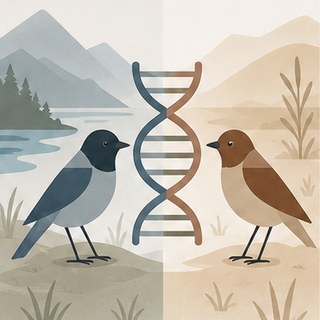
Hybridization and speciation genomics
Hybrid zones have been described as a “natural window into the evolutionary process.” They allow researchers to observe which genes move freely across a zone of contact and which are restricted, generating hypotheses about the genetic basis of speciation. Co-distributed hybrid zones, or “suture zones,” offer a comparative approach for understanding how differences in natural history and ecology shape speciation within a shared geographic context. Here, we often use birds and beetles as study systems to investigate the interplay between divergence and gene flow through the speciation process.
Population genomics and biogeography
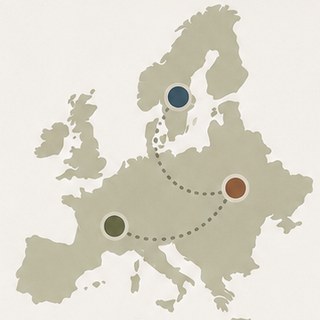
A species can be thought of as a network of interconnected populations situated in geographic space. Biogeographic barriers, environmental context, and their change over geologic time shape demographic history, genetic diversity, population structure, divergence, and gene flow — and in turn, genotype, phenotype, and the capacity of populations to adapt to a changing environment. Here, we use birds, mammals, and pollinator species as study systems to investigate how geography and history shape the genetic makeup of species.
Museomics and genomic methods
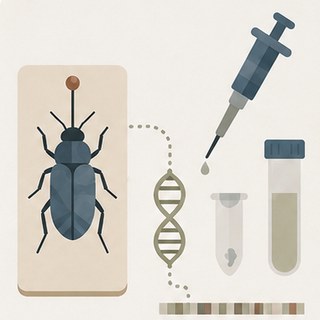
Museum vouchers contain a wealth of genetic information, but the DNA they preserve is typically degraded, difficult to access, and challenging to analyze. Part of our work involves testing and optimizing molecular protocols for extracting DNA from museum specimens, and developing pipelines to analyze the resulting data. The approach is often specific to the taxon, preservation method, and research question at hand, but it opens the study of extinct species, taxa that are otherwise difficult to sample, and genetic snapshots from a historical time point. Here, we have used birds, mammals, insects, coral, shrimp, and many other taxa as study systems. Beyond museomics, we are also interested in developing, optimizing, and testing molecular and bioinformatic methods more broadly, to expand our capacity to address a wider range of evolutionary questions.
People
1Linda Hagberg
PhD Candidate
2025 - present
Get in touch
Invalidenstraße 43
10115 Berlin, Germany